These 10 rising professionals are making an outsized impact on their organizations—and on the future of the snowsports industry.
From the industrial engineer called “mountain operations’ Swiss Army knife,” to the operations administrator who’s “the connective tissue between departments,” this year’s “10 Under 30” class seems to have a universal ability to juggle multiple jobs and hop between different departments with ease, contributing to their resorts as a whole more than any one job title would suggest. Their leadership, innovation, and passion have created a trickledown effect that’s elevated everyone around them while making their workplaces more efficient and a whole lot more fun.
From the industrial engineer called “mountain operations’ Swiss Army knife,” to the operations administrator who’s “the connective tissue between departments,” this year’s “10 Under 30” class seems to have a universal ability to juggle multiple jobs and hop between different departments with ease, contributing to their resorts as a whole more than any one job title would suggest. Their leadership, innovation, and passion have created a trickledown effect that’s elevated everyone around them while making their workplaces more efficient and a whole lot more fun.

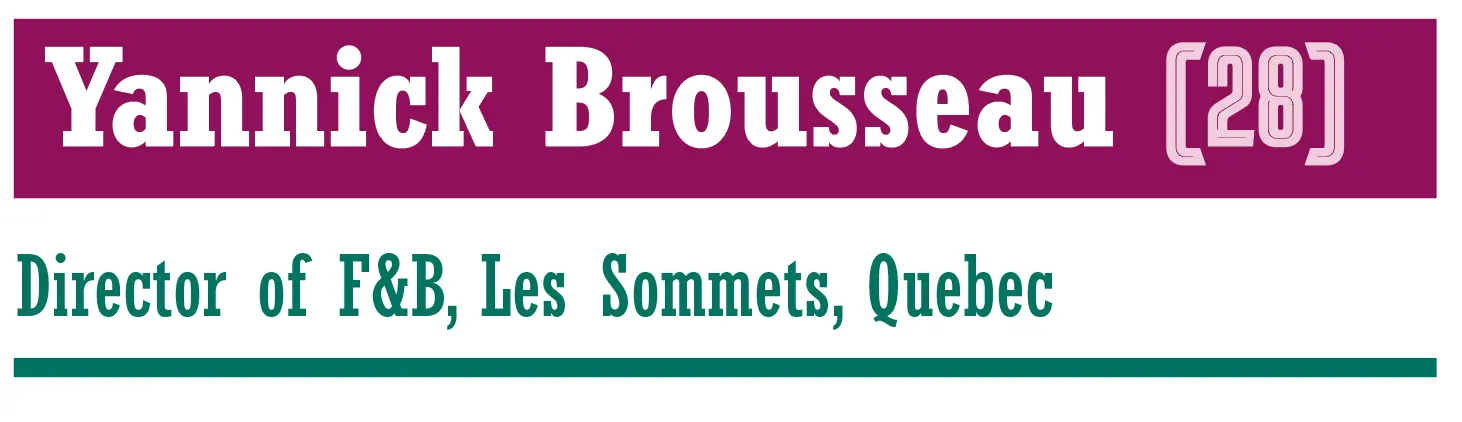
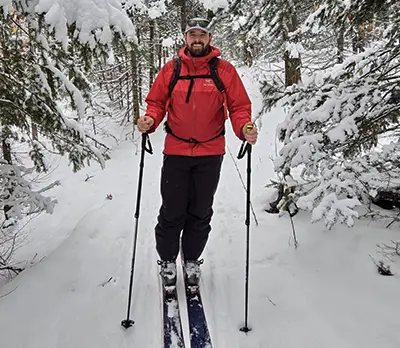
Growing up in Quebec, Yannick Brousseau had a strong understanding of mountain culture and community, but it was a job as ski school director at Sommet Olympia that taught him to truly understand the business. “I realized that I wasn’t only passionate about the sport itself,” he says, “but also the experience around the activity that creates memorable moments for guests and teams in the industry.”
For two seasons, he ran the ski school at Olympia while also serving as the assistant director of mountain operations, where he managed 120 instructors and led lift operations, patrol, customer services, and parking and “quickly earned a reputation for his operational awareness and natural ability to mobilize teams,” says a nominator. The multidisciplinary path helped him grasp how interconnected every department is in delivering a successful guest experience. It also helped prepare him for his current role, in which he oversees F&B operations across 30 outlets at five mountains, including operational planning, staffing, budgeting, guest experience, inventory management, health and safety, compliance, and leadership development.
When he was hired, the department was undergoing a full management transition with little time before peak winter operations. Brousseau moved swiftly to rebuild the leadership structure, integrate new supervisors, and instill a culture rooted in trust, accountability, and collaboration, says a nominator.
Shortly after assuming the job, he led a successful roll-out of a new point-of-sale system across all five mountains simultaneously. He has elevated food offerings, reimagining après ski spaces as true gathering hubs, and played a key role in delivering major resort events that strengthened team cohesion and guest experience.
A “collaborative and approachable” manager, Brousseau believes strong leadership starts with trust, communication, and leading by example. “I’m not a specialist in all areas, but I’m present and try to learn and understand everybody’s reality, so I can better support their work,” he says.
His favorite part of the job is the people. “The ski industry brings together passionate, energetic, and resilient teams,” says Brousseau. “I’d like to say that it’s more than a workplace; it’s a family with whom we face everyday challenges together.”
“Yannick Brousseau,” says a nominator, “embodies the future of resort leadership: grounded in experience, driven by people, and committed to raising standards across the mountain industry.”

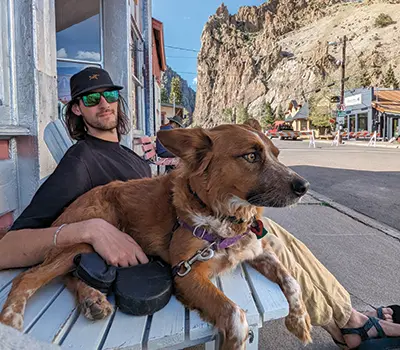
Julian DePasquale didn’t plan a career in mountain operations. He grew up skiing on the East Coast, then headed to Colorado for engineering school. But he ultimately spent more time on the mountain than in class, and eventually found his way to Colorado Mountain College’s ski area operations program.
While earning his associate degree at CMC and bachelor’s in leadership and management, DePasquale patrolled at Ski Cooper, eventually rising to HR and risk manager and taking on parking ops and mountain dispatch as well. “That instinct to see the whole business and not just his lane is what makes him the workforce leader he is now,” says a nominator.
In college, DePasquale was drawn to risk management. He had been on the incident investigations team as a patroller and found it a unique part of the industry that he was pretty good at. In 2023, his first year as risk manager at Purgatory, he cut workers’ compensation indemnity payments by 60 percent and worked with patrol leadership to design and lead the rollout of an Integrated Safety Response System, which earned an NSAA Safety Award nomination.
As Purgatory’s director of human resources and risk management, he’s now heading a project that’s revolutionized the resort’s approach to recruiting, training, and retaining employees. Called the Trails System framework, this multi-year partnership with Snow Operating gets roughly 200 employees across rental, retail, ticketing, indoor/outdoor guest services, parking, and maintenance cross-trained under one centralized model, with recruitment, onboarding, and scheduling consolidated inside HR. In its third year, the program has reduced headcount and payroll significantly while measurably improving employee satisfaction and net promoter scores.
Outside the resort, DePasquale is a founding industry voice on Fort Lewis College’s FLC@Work, a regional initiative co-designed with employers, organizations, and Tribal Nations to deliver workforce training and professional development. “He represents the workforce-development conversation our industry is having with itself in 2026,” says a nominator, “and he’s doing the work at the resort, regionally, and at the state level, without fanfare or significant recognition.”
Back at CMC, he knew he wanted to be a GM one day, like some of the mentors who helped shape him as a leader and stoked his career ambitions. “We all get into the industry because we love skiing,” says DePasquale. “It’s a business, but at the same time, it’s not.”

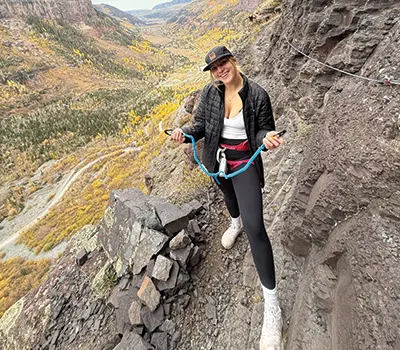
In just two years with SOS Outreach, Lydia Eger has quickly jumped from program coordinator to program manager for the organization’s Eagle County, Colo., site, its founding location and one of its most complex and deeply rooted programs. In this role, she led a program engaging 495 youth last season, guiding participants through a multi-year model that builds belonging, confidence, and leadership from elementary school through post-high school.
SOS is an outdoor-based mentorship program that uses skiing and snowboarding to teach life skills and emotional regulation for kids from fourth grade through age 18. As program manager, Eger, who grew up skiing in Tahoe, wears many hats—recruiting adult mentors, onboarding, facilitating workshops, working with ski areas to run on-hill days, overseeing several staff, and helping to manage 70 volunteers whom she pairs with youth mentor groups. “It’s the perfect job,” she says, “a balance between outdoors, kids, and doing a lot of logistics, which I enjoy.”
Nominators call her “a rising leader whose impact extends beyond program delivery and into the future of our mountain communities. She has an uncommon ability to see and connect with participants, families, mentors, and partners, and translate those relationships into stronger, more resilient community engagement.”
That was on display this spring when she led graduation in front of more than 200 participants and their families, a role that demands both presence and trust. “The room was full not by chance,” says the nominator, “but as a direct reflection of the community she fostered through the season.”
Eger expanded that impact this season by taking the lead on an existing program in which 22 parents of SOS kids learned to ski and snowboard, deepening family connection to both the sport and the broader mountain community, an essential component to long-term participation.
A lot of the kids in the program face challenges, financial and socioeconomic, says Eger, “so we want to set them up for success.” She’s working to expand summer programming for kids aged 15 and older, in which they practice interviewing, work on resumes, learn about summer jobs at resorts, and gain applicable life skills.
Of course, she gets to ski with the kids on their on-snow days, 10 or 12 each year—a nice perk, she says. Mostly, “It’s just a really cool opportunity for these kids,” says Eger. “They may get to meet Shaun White or travel from Detroit to Colorado, where they’ve never seen mountains that big.”
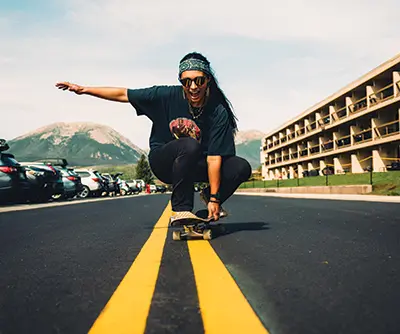
When Lexi Kagan enrolled in the Colorado Ski Country USA passport program in grade school, it opened the door to a lifelong love of skiing; when she moved to Nederland, Colo., and got a job with Outward Bound, she fell in love with the outdoor industry as well. She’s now been at Eldora nearly three years, supporting the GM and director of mountain operations, serving as a central operational resource for the entire resort leadership team, and becoming a critical component of resort operations.
“One of my big priorities is to build up processes,” says Kagan. “Trying to identify gaps in processes or struggles that departments or individuals have and coming up with solutions. Also bridging gaps between leadership strategy and ground-level staff.”
Nominators say she’s implemented systems to make the diverse aspects of operations run much smoother, with better communication, proper technologies, and more efficient production. These include a capital project submission process built through Microsoft Forms and a shared online space where staff can reserve equipment.
“When I first came to Eldora, I recognized the dependency on knowledge in the ski resort industry,” says Kagan. “I saw a need for making these things accessible, so we didn’t have to rely on face-to-face meetings and department leaders to bring information back to employees. I really love that I’m able to work with many different departments to bridge the gap between strategy and execution.”
Kagan is “the connective tissue between departments,” moving projects forward efficiently and collaboratively, say nominators. She’s played an instrumental role supporting operational and strategic initiatives across the resort and has led the coordination of maintenance capital planning, financial tracking, cross-department project management, contractor communication, and operational compliance systems.
“In addition to her operational responsibilities,” adds one, “Lexi regularly serves as a liaison between internal departments, contractors, public stakeholders, neighboring property owners, and local agencies. Her professionalism and communication skills consistently reflect positively on Eldora and help foster strong working relationships throughout the community.”
Passionate about women in the industry, Kagan sits on the steering committee for a pilot program created to mentor women and provide space for leadership development opportunities at Eldora.
She was awarded Colorado Ski Country’s “Snow Professional of the Year” this season as a result of all her hard work. “I was seeking that unicorn outdoor position of something stable and scalable but also fun and interesting,” she says. “I feel lucky that I found it, and to be a part of so many different aspects of Eldora.”
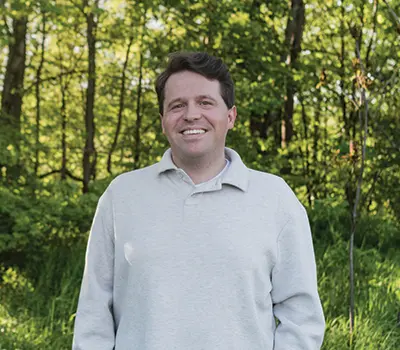
Matt McAlary brings a rare mix of creative vision, mountain credibility, and strategic thinking to his role as creative services manager at Vermont’s Killington/Pico. A former captain of the UVM freestyle ski team, the Maine native worked several years as a marketing and brand manager in the beverage/alcohol space before jumping over to Killington in May 2025. “It was time to start mixing passion with progression,” he says.
Today he oversees everything from organic social media content to paid digital advertising to branding and signage at the resort. “Basically, how the brand is being broadcast and received by the public,” he says. He works closely with event and communications teams to make sure that brand is being presented consistently across touchpoints. Day-to-day might find him behind a camera, editing content, or working with the design team.
From a branding and content marketing standpoint, McAlary played a major role in one of Killington’s strongest winters on record, helping attract more than 30,000 net new social followers over the season. A standout example was his leadership and planning for the Superstar Showdown with the “Jim & Mads Show,” a spring event that generated thousands of likes, hundreds of comments, industry media coverage, and a full registration with waitlist.
Called “inspiring,” “thoughtful,” and “solutions-oriented,” McAlary strives for an inclusive culture that accommodates creativity. This includes “tissue sessions,” brainstorming meetings that allow staff to submit and discuss marketing ideas anonymously. He believes the power of any marketing team is written in a culture of collaboration, open-mindedness and a willingness to think big. “If I can be a vessel for creativity to be brought out to full capacity, I feel like I’ve done my job,” he says.
One goal has been to bring back some of the irreverent, lighthearted content that was once a staple of ski resort marketing. This included a Masters golf-themed pond skim promo and a spoofy, pre-season “snow reporter’s worst nightmare” reel. The work earned a finalist recognition for NSAA’s Best Social Media Campaign award.
“Ever since his arrival,” says a nominator, “Matt’s leadership and creativity has trickled down to all of us, resulting in a culture shift centered around independence and uniqueness.”
McAlary is proud of this shift. “We have a lot of freely thinking people, a lot of creative juices flowing, and a team that isn’t afraid to think big and push boundaries from a marketing standpoint,” he says. “We also have the support that allows us to bring those ideas to life.”
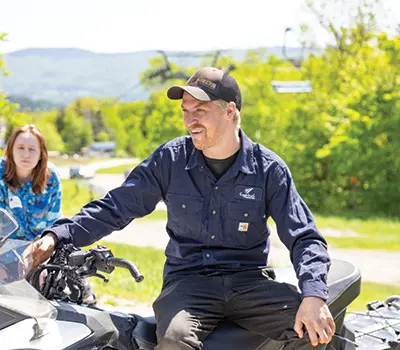
Silas Pollard didn’t go to tech school, but growing up on a farm gave him lots of hands-on experience working on equipment. “There’s a lot of parallels between farming and the ski industry as far as making it work with what you’ve got,” he says. “On the farm, it’s for the sake of the animals. In the ski industry, it’s for the guest experience.”
As vehicle maintenance manager at Sugarbush, Pollard manages a staff of five and deals with administrative tasks like budgeting. But he spends the better part of the day turning wrenches alongside his team. One major part of the job, he says, is to bring on new technicians and help them learn. “I always thought I wanted to be a teacher one day, so this is an opportunity to do something I enjoy in a place that I love.”
Pollard believes that educated employees are happier employees, and happy employees get more done. He prioritizes finding different learning opportunities and ensures that staff work as a team and learn from one another.
“If you invest time and money in furthering employees’ education and helping them learn new things, they are more likely to stick around,” he says. “A lot of us in this industry are people who want to keep moving and learning, so if you learn something new every day or week, you’re excited to keep coming back every year.”
Sugarbush has a program where local tech schools send students to shadow mechanics at the resort, and more younger faces have popped up in the maintenance department since Pollard started hiring. “The biggest thing we’ve seen is that there are not a lot of people who get into the world of being a mechanic that know about opportunities at ski resorts,” he says.
Pollard has exhibited tremendous patience and maturity while mentoring new mechanics, say nominators. He’s a “dedicated,” “intelligent,” and “capable” leader who is resourceful and wise beyond his years, who comes in at all hours to repair equipment—and will assist snowmaking, lift maintenance, grooming, and facilities when needed.
“The job title of ‘vehicle maintenance manager’ is completely inadequate for the role that Silas fills. He is well-liked, not only for his exuberant laugh you can hear across the base area, but for his seemingly endless ability to maintain a positive attitude while triaging the day’s disasters.”

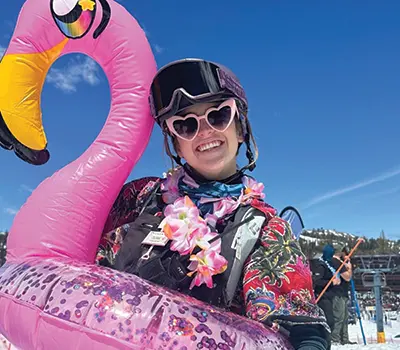
Nominators say Olivia Ray’s leadership and energy have transformed Sugar Bowl’s Sugar Rush tubing park into one of the most dynamic and successful operations on the mountain. “She didn’t just run the operation,” they say. “She elevated it.”
Ray had been lift operations assistant manager before she was promoted into the role last season. In year one, she delivered “exceptional results.” Under her leadership, Sugar Rush generated $1 million in revenue while driving additional retail performance and a high-volume guest experience.
Sugar Rush is “a mini resort within the resort,” says Ray, who manages everything from staff to vendors to retail sales and the facility’s F&B outlets. “I love learning how everything works together, and there’s a lot in tubing that coincides with lift ops and the basics of regulations and ANSI, especially since there’s a surface lift.”
A wilderness EMT certification she received last summer has also enabled her to serve as the tubing operations’ patrol on duty, a “nice perk” that has helped her grow as a leader and remain calm in stressful situations.
Perhaps most important to her is getting to know her staff of 12 so she can understand their specific needs and create a culture where each feels seen. She strives to reward them for positive guest feedback and make sure that each employee is acknowledged. “When you recognize strengths and triumphs, it makes people want to keep building on that,” she says.
“Olivia built a team culture that was unmistakable” while showing “strong judgment and confidence,” say nominators. “She encouraged innovation within her team, testing new approaches to improve flow, enhance guest experience, and increase efficiency. Her teams showed up engaged, positive, and proud to be there.”
At Sugar Bowl orientation, each employee takes a DOPE Bird 4 Personality Types test. Your bird species reveals your specific approach to life and work. Ray is a peacock—the enthusiastic connector. It suits her leadership style—positive, fun, encouraging, energetic, and all-in. “I love to be positive and make everything fun,” she says. “I love Sugar Bowl and the culture and community, and I love sharing that with people.”

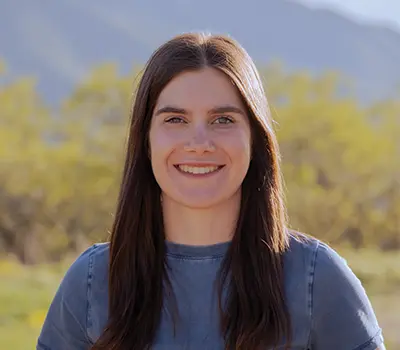
An industrial engineer by trade, Julia Reedy “has quickly become mountain operations’ Swiss Army knife,” says a nominator. “In just one year, she’s made a remarkable impact across one of the most ambitious operational expansions in the ski industry’s history.”
The Ohio native had no plans to find a “corporate role” in the ski industry when she took a job as an instructor at The Canyons, Utah, post-college. One season there turned into four, the last spent earning a master’s degree between ski lessons. During that time, “I would see stuff at resorts and think, ‘They need an industrial engineer,’” says Reedy. “But the job just didn’t exist.”
The job didn’t exist at Deer Valley, either, until Reedy was hired last July. Well into an expansion that will double its size, the resort was looking for someone who could offer analytical operation support in terms of process improvement using data, for both the expansion and existing operations. She’s now the only resort-level industrial engineer in Alterra’s portfolio.
Reedy’s days are spent working with all functions of the business, gathering data, and helping various departments apply it to make decisions. There’s a ton of analytical work that comes with the expansion: How many seats do we need in a restaurant? How many ticket windows do we need for operational efficiency?
There’s a real opportunity for an industrial engineer to have an impact, Reedy says. “There’s stuff I’m doing specific to the expansion and also, ‘how do we best build out our current system to accommodate that growth?’”
As a sort of “internal consultant” who’s part of the finance department because it provides more autonomy, Reedy’s job combines the experience of industry long-timers with data to tell a story. “It’s always data partnered with the knowledge and experience of operators—data doesn’t tell the whole story,” she says.
To her, the most impactful aspect of the job is helping to solve problems. “It’s really fulfilling for me to help empower other people to make their jobs easier,” says Reedy. “For example, the person selling tickets where there’s one window but should be three. That puts a lot of pressure on the person, and we want to alleviate that.”
The snowsports industry has gotten more complex, with loads more data available than ever before, she notes. “We want to be able to leverage that to make the best decisions we can. There’s always a system or process that can be improved or optimized.”
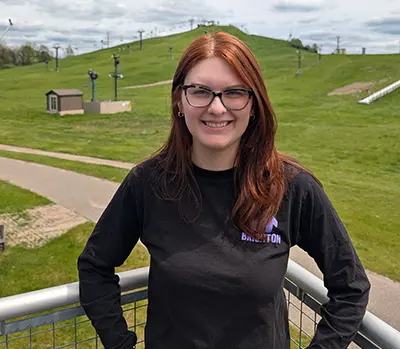
For Taylor Schechter, what started as a seasonal job at Pennsylvania’s Montage Mountain while in high school became a lifelong commitment to the snowsports industry.
After graduating from college with a degree in safety management, Schechter gained experience in the construction industry, strengthening her technical safety expertise and leadership skills. She soon returned to the ski industry to pursue her dream role: combining her professional focus on safety with her passion for skiing. She joined Jack Frost and Big Boulder, Pa., as health and safety senior specialist, where she made an impact by elevating safety programs, strengthening compliance, and building trust with frontline teams.
“Something I learned after being in two different industries,” she says, “is safety is safety, and the core topics—identifying risk, trying to control it, and coming up with action plans, training teams, doing inspections—are similar.”
After two years, Schechter was promoted to manager of environmental health and safety (EHS) for Vail Resorts’ Midwest Region. In this role, she oversees EHS operations for 10 ski areas across six states and mentors an EHS senior specialist based at Wilmot Mountain.
Her leadership has resulted in lasting improvements to both employee and guest safety. During the most recent season, she traveled extensively to all 10 resorts, working directly with leadership teams and frontline staff to strengthen safety culture, improve hazard recognition, and reinforce accountability at all levels of operations. Her hands-on approach has been instrumental in shifting safety from a compliance requirement to a shared value across the region.
An active member of the Vail Resorts’ Women & Allies group and the EHS Women in Safety network, Schechter recently served as a panelist at an EHS leadership event. She’s been hosting a biweekly EHS training series the last three years, an interactive Teams call that delves into various safety-related topics. The series has expanded from eight to 22 resorts across the Vail portfolio; all are invited to participate in the discussion. “It’s a consistent forum to have conversations around risk and problem solving and helps improve safety performance across the board,” she says.
Schechter’s influence “already extends across multiple resorts and hundreds of employees,” says a nominator. “Through her career progression, regional impact, and unwavering commitment to safety and community, she exemplifies the leadership, innovation, and passion that the ‘10 Under 30’ program exists to recognize.”

As lead groomer at the New Jersey-based Winter4Kids, Sharif Smith leads the team with a level of ownership and attention to detail that goes well beyond his role, nominators say. “He is not just maintaining the mountain; he is actively shaping the experience for every participant who comes through our program,” says one.
The New York native got his first job at age 14 at Mount Peter, and worked there for about six years, eventually as ski school supervisor and park manager. He started grooming part time at Winter4Kids in January 2025 and moved to full-time last September, managing terrain park operations and two staff, ensuring snow quality is prime and that all features are rideable and safe.
Winter4Kids is a non-profit, youth-only mountain dedicated to empowering kids through winter sports. Last season, 1,864 learn-to students came through the park, with 600 more race kids utilizing the competition slope (as well as the park). Smith says the organization’s mission as a “teaching mountain” inspires his attitude. “It’s important for me to get things perfect, knowing that I have people who have never thought about skiing or snowboarding before,” he says. “I want to make it so that no one has to worry about what they’re doing.”
In his first winter, Smith led the design and buildout of Winter4Kids’ Progression Park, a purpose-built learning environment that uses terrain features to naturally guide skill development. The progression park incorporates shaved rollers, banked turns, and gradual transitions that help participants learn in an intuitive way. The impact, nominators say, has been immediate and measurable. Riders are progressing faster, building confidence earlier, and experiencing success in their first sessions using the features that Smith designed.
He’s also improved operational efficiency and tackled challenges brought on by variable weather, which included weeks of various “push projects” to keep the beginner trail open. “His ability to design features that hold up over time and adapt to changing conditions has helped maximize snowmaking and grooming resources while maintaining a high-quality experience throughout the season,” says a nominator. “His work is already influencing how we think about on-snow learning, and he has the potential to shape the future of our industry.”
For Smith, who tools around in three Prinoth cats and watches more sunrises than the average Joe, it’s about creating an experience that all riders will enjoy. As for advice he’d give others early in their career? “Care about your work ethic and the product you give out. That’s what got me here.”