

A double chairlift in one of North America’s largest ski areas has a length of 5,600 feet and operates at 500 feet a minute. By actual count, there are 32 roller bearings, 678 ball bearings and 878 sleeve bearings on this lift. On line sheaves, there are 668 ball bearings, each with seven balls in each bearing, making a total of 4,676 balls strung out over a mile. Each day each line sheave makes 55,000 revolutions, and in 150 days these sheaves turn more than eight million revolutions. Failure of any one of these bearings can shut that lift down from 15 minutes to 15 days.
Generally, bearings can be divided into two groups: sleeve bearings and anti-friction bearings. Sleeve bearings on lifts are generally limited to shafts or pins where the rotation speed is slow, intermittent or of a rocking nature. The sleeve bearing has a pin or shaft, which can be made of steel, bronze, nylon or other material. Frequently, the sleeve material is self-lubricating. Bronze sleeves impregnated with graphite can be obtained, and nylon bushings are available that need no lubricant for some applications.
Sleeve bearings are usually found between the rope grip and the carrier (chair, T-bar hanger) and on parts of the backstop, electric brake and emergency brake. The balance beams on line sheave units are usually pivoted on sleeve bearings, and counter-weight sheaves often have them.
Anti-friction bearings can be divided into three general groups: ball bearings, roller bearings and needle bearings. From the viewpoint of design and selection, each group has advantages and disadvantages, but let’s leave that selection up to the lift manufacturers. Our job is to keep the lift running with the bearings that we have. Maintenance and trouble shooting are about the same for all three types of anti-friction bearing.
Anti-friction bearings are usually found on parts that rotate constantly: line sheaves, bull-wheels and drive components. Frequently parts subjected to frequent but intermittent motion such as counter-weight sheaves have anti-friction bearings.
Nylon bushings on chairlift footrests that can be raised are equipped with a sleeve bearing requiring no lubricant. Maintenance includes frequent inspections to see that the bushings are still in place. While the loss of a bushing may not require an immediate shutdown, the resulting noise is annoying. More important, an egg-shaped hole is worn into the part, making certain that the replacement bushing won’t fit.
The vast majority of sleeve bearings on lifts require periodic lubrication. When two surfaces rub against each other, they wear against each other. The amount of wear depends on the speed of motion between the surfaces and the amount of pressure on the surfaces. It is easier to prevent wear by pumping a fresh intermediate film of lubricant into the bearing than it is to replace a sleeve, a shaft or both. Unfortunately just applying a grease gun to each grease fitting and pumping it a couple of times isn’t the answer. Look at each sleeve bearing and figure out where the rubbing could occur with a dry bearing.
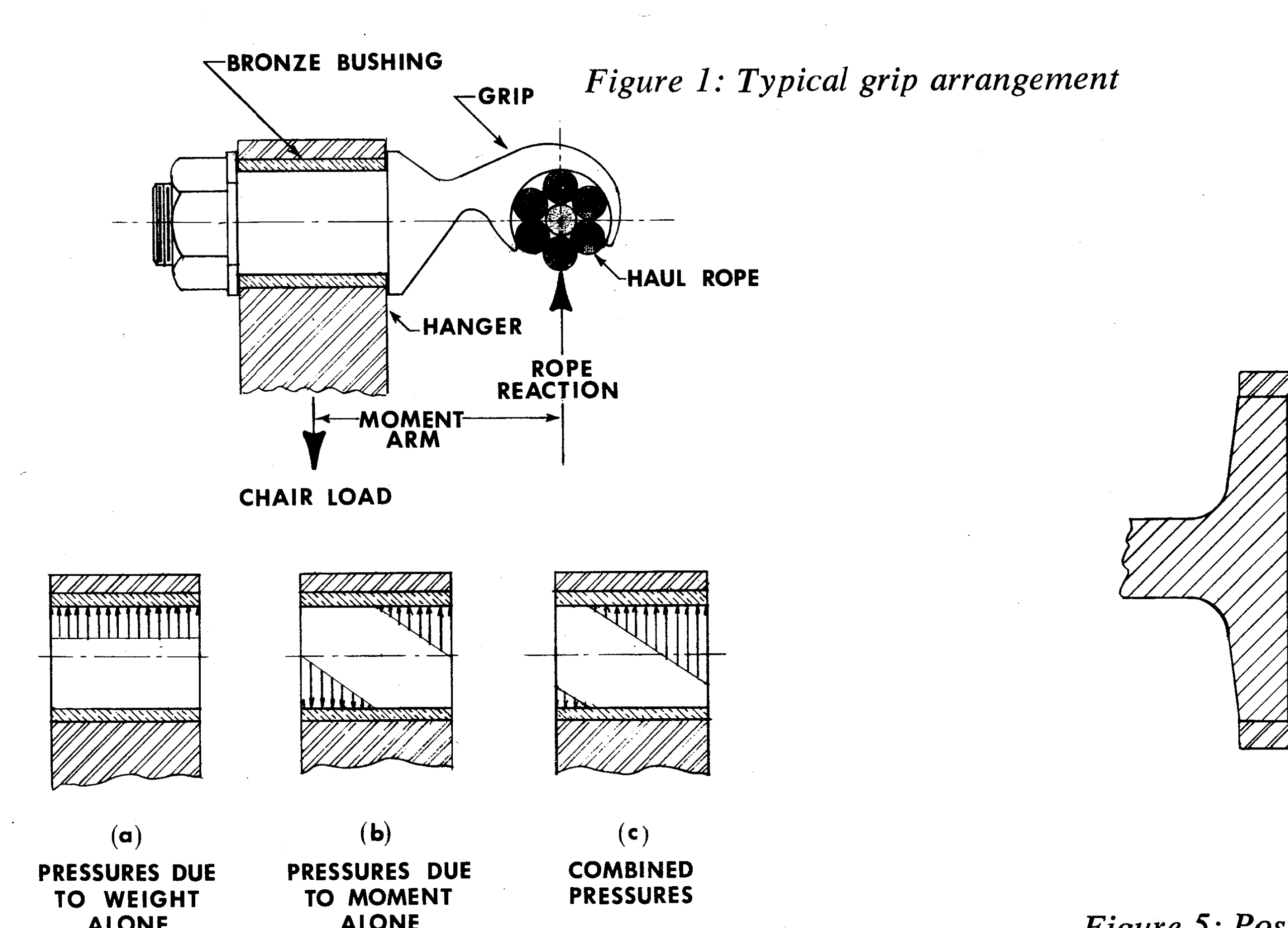
Figure 1 shows a typical bronze bushing in a chair hanger. This sleeve bushing takes both a direct load downward and a moment load because the bushing is off-set from the center of the haul rope. The weight of the chair and passengers causes pressure along the top of the bushing (Figure 1a). However, the offset of this bushing from the haul rope causes additional pressure on the top inside and bottom outside of the bushing (Figure 1b). Combine these two effects, and the actual pressure is similar to that shown in Figure 1c. Just pumping grease into this fitting will probably lubricate the bottom inside and top outside quite well, but will leave the critical points dry.
To lubricate correctly, take the weight off the chair by pushing it when the lubricant is pumped in. Then rock the chair to spread the lubricant around. Frequently, sleeve bearings are grooved to provide a path for the lubricant to follow from the point of insertion to the critical points on the bushing. Where the pressure between the shaft and bearing remains constantly high, even under conditions of a non-operating lift, the lubricant cannot reach the critical areas. Finally, wipe all excess lubricant up to save dry cleaning bills. If each sleeve bearing point is studied before lubricating and an extra effort is taken to get the lubricant to the right place, replacements and downtime can be reduced.
Finally, there are lifts operating that are almost impossible to lubricate in the necessary spots. Check with the manufacturer about these points. If replacements are a real problem, ask him for help. Maybe you can effect a minor change to reduce or eliminate that problem area.
Ball, roller or needle bearings need a film of lubricant between the rolling elements for reasonable life, just as sleeve bearings do. Because the materials are hardened and usually rotate at greater speeds, the lack of lubricant will usually show up more dramatically by a complete bearing failure. Wear in anti-friction bearings is detected by a “sloppy” bearing, or a flat spot worn on rolling or stationary elements. The lubricant itself can become contaminated with dust, water or other foreign materials, causing pitting or abrasion on the bearing elements.
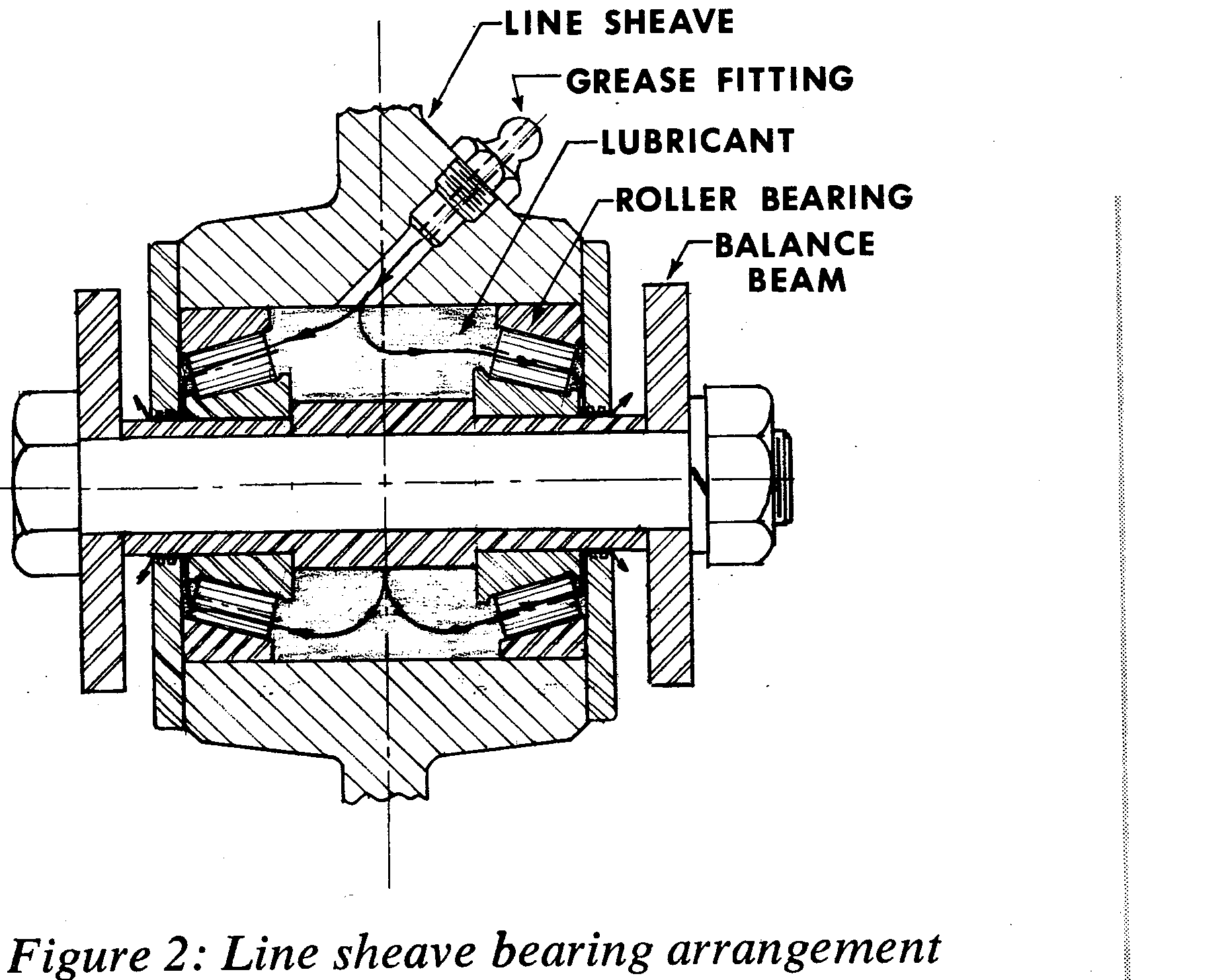
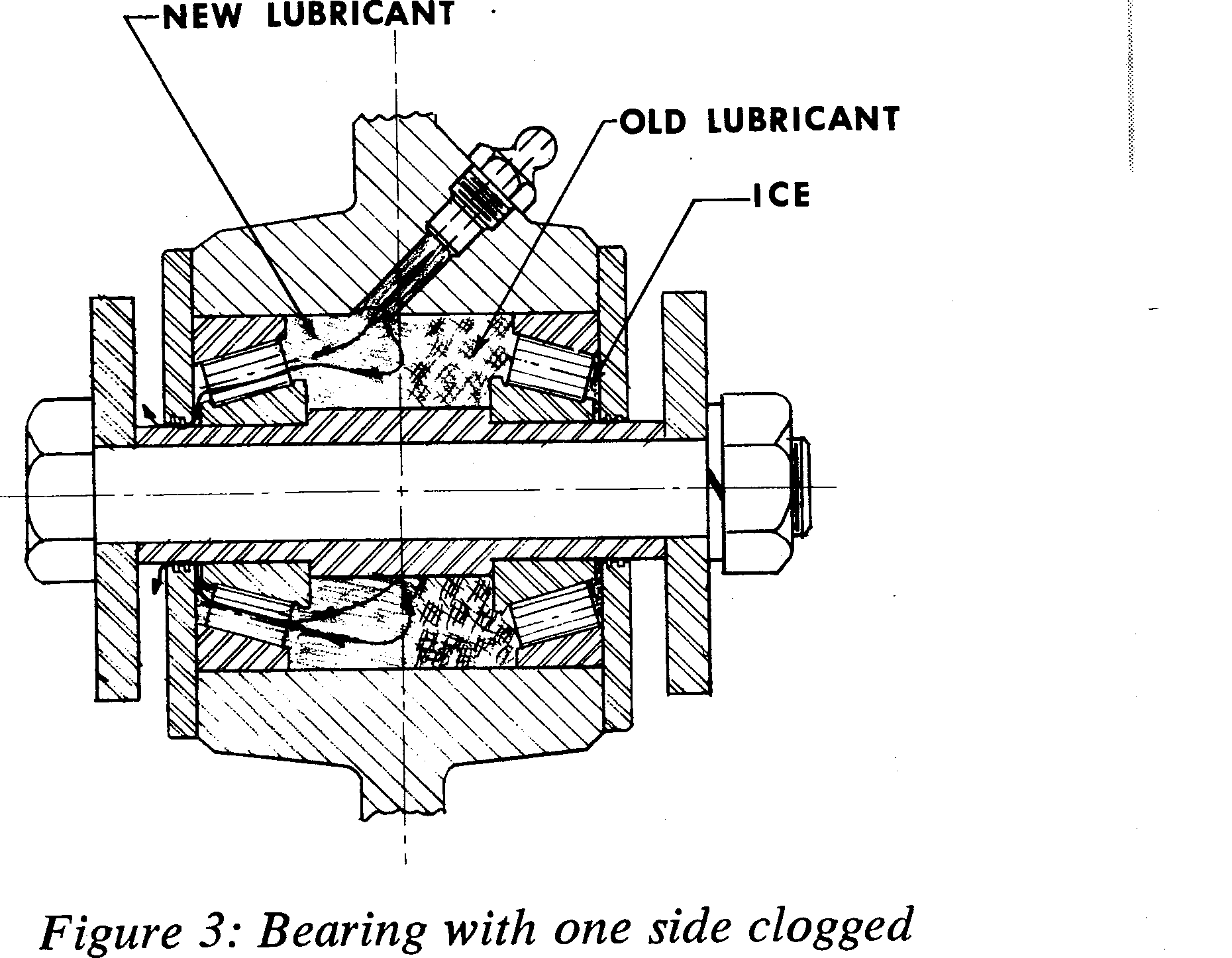
The important factor in lubricating here is to be sure the new, clean lubricant gets to the moving elements of the bearing and replaces the old lubricant. Figure 2 shows a typical bearing arrangement for a line sheave. New lubricant is pumped into the cavity between the two bearings. Ideally, the new lubricant forces the old out at the ends of the sheave hub. However, if moisture has collected and frozen at one end (Figure 3), the new lubricant will take the easiest path out — past one bearing only — and leave the second bearing with a supply of old, contaminated lubricant. The precaution to take here is to be sure clean, fresh lubricant is injected from both sides of the bearing.
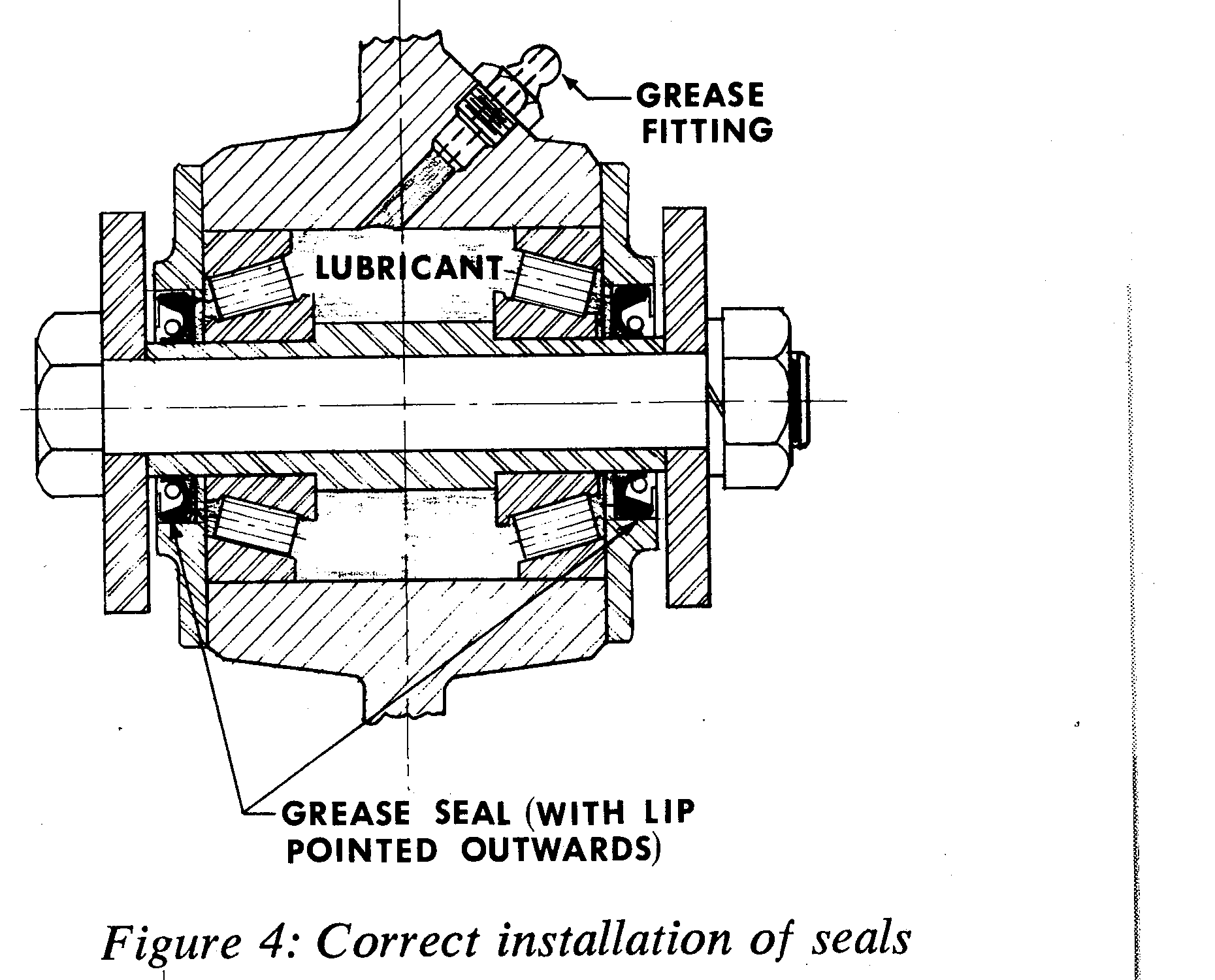
Frequently, bearings are provided with leather or rubber seals to retain the lubricant and prevent foreign material from entering the bearings. Here it is important that the seals are placed correctly to permit the new lubricant to force out old lubricant. Figure 4 shows a correctly installed seal. The lip of the seal faces outward, so that inside pressure can force a flow outward. If the seal is installed with the lip mounted inward, interior pressure will cause the seal to become tighter on the shaft, and sufficient pressure will force the entire seal out of the assembly. When lubricating a new installation, check carefully before applying excessive lubricating pressure. If the seal is reversed, check with the lift manufacturer. At times there are reasons for deliberate reversal of seals.
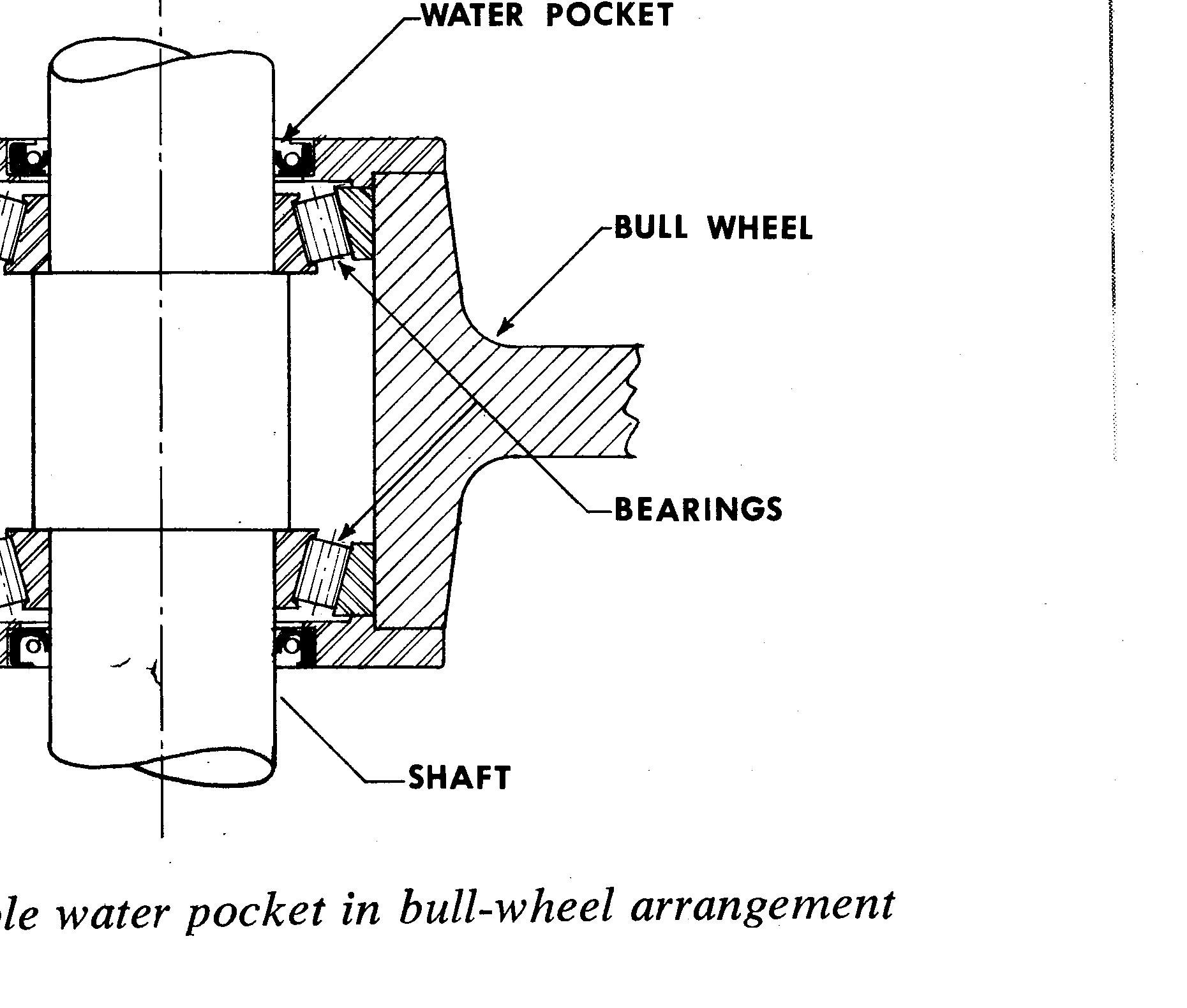
Check the arrangement of bearings to be sure that there is not a funnel for water to enter, as shown in Figure 5, where a vertical shaft has an incorrectly installed seal. Condensation can run down the shaft and fill up the circular pocket around the seal. During the day, the sun heats up the entire bearing cavity, causing a slight increase in pressure within the cavity. This can force a slight amount of lubricant out of the bottom seal. Cooling during the night reduces the pressure within the cavity, and the ring of water is sucked into the bearing. Look for possible trouble spots before they become emergencies.
Let’s face it, all bearings have a useful life, and then they must be replaced. How long should a bearing last, provided it has been correctly installed and properly lubricated and maintained? Every specific design has characteristics of load, impact, speed and other variables. Even a group of bearings under identical operating conditions will exhibit varying lengths of service before they fail. Here’s where records of replacements play a key part in a good maintenance program. Replacement of a couple of line sheaves due to bearing failure during a winter season isn’t unusual or cause for alarm. However, suppose your records on a lift look like this:
| Year | Replacements |
|---|---|
| 1959 | 3 |
| 1960 | 2 |
| 1961 | 4 |
| 1962 | 3 |
| 1963 | 5 |
| 1964 | 12 |
| 1965 | 11 |
| 1966 | 21 |
| 1967 | 33 |
If they do, it is high time to consider replacing all bearings during the summer. From the records, it can be seen that the number of failures during the past season have been 10 times the number during the first three years of the lift’s operation. You can expect that next year even more replacements will be required. Remove bearings and consult a bearing specialist about their condition. You’ll save money and time by making a complete replacement in the summer. Going back to the 5,600-foot lift, nine years of service represent 72 million revolutions of these sheaves. A corresponding front-wheel bearing in an automobile would have traveled over 100,000 miles.
A failure of a large major bearing (bull-wheels, reducer, etc.) during the operating season can result in days of downtime. Eight to 10 years of service from these bearings is sufficient cause to discuss the advisability of replacement with the lift manufacturer.
Books have been written on the proper type of lubricant for specific applications and the frequency of lubricating. Each design and location has specific problems. Be guided by the manufacturer’s recommendations. Suggestions for a new type of lubricant should be checked out. Your information source may have had no experience with a bearing exposed to mountain-top weather. Or he may have something which fits your situation. Don’t take one person’s word for the new product. Check it out with the lift manufacturer and with other areas.