


Overlooking the St. Lawrence River and historic Quebec City, the new 8-passenger gondola at Mont Ste. Anne has been described as “99 rooms with a view.”
The lift, which opened for business November 18, 1989, enjoyed the benefit of long-term planning. Working with Sno-engineering, the resort had developed a 5-year master plan in 1985. The modernization of uphill transportation called for the detachable quads that were installed in 1986 and 1987, as well as for the replacement of the 25-year-old, 700pph Mueller gondola.
Four members of Mont Ste. Anne’s management team, headed by Claude Beaudoin, general manager, visited new gondola installations in Europe and North America, evaluating various design options. Among the important considerations were: climate (it can feel very cold and bitter!); skier comfort preferences; and, very importantly, the significant summer operations, with a traffic mix that includes older citizens.
The team was unanimous in opting for the 8-passenger gondola. It went further, having been impressed with CWA’s cabins, and so eventually specified in their bid to have the CWA Omega 8-passenger cabin.
In January 1989, the go-ahead was given to Doppelmayr to manufacture and install. Construction began on May 15 with the dismantling of the old gondola; acceptance testing was completed on schedule by November 15. Long planning and lead-time had made a difference.
The Mont Ste. Anne team had felt strongly about the importance of building design; so, early on, the architects from Regis Cote and Associates were sent to Europe to study some designs that had impressed. The finished buildings reflect this attention to architectural design.
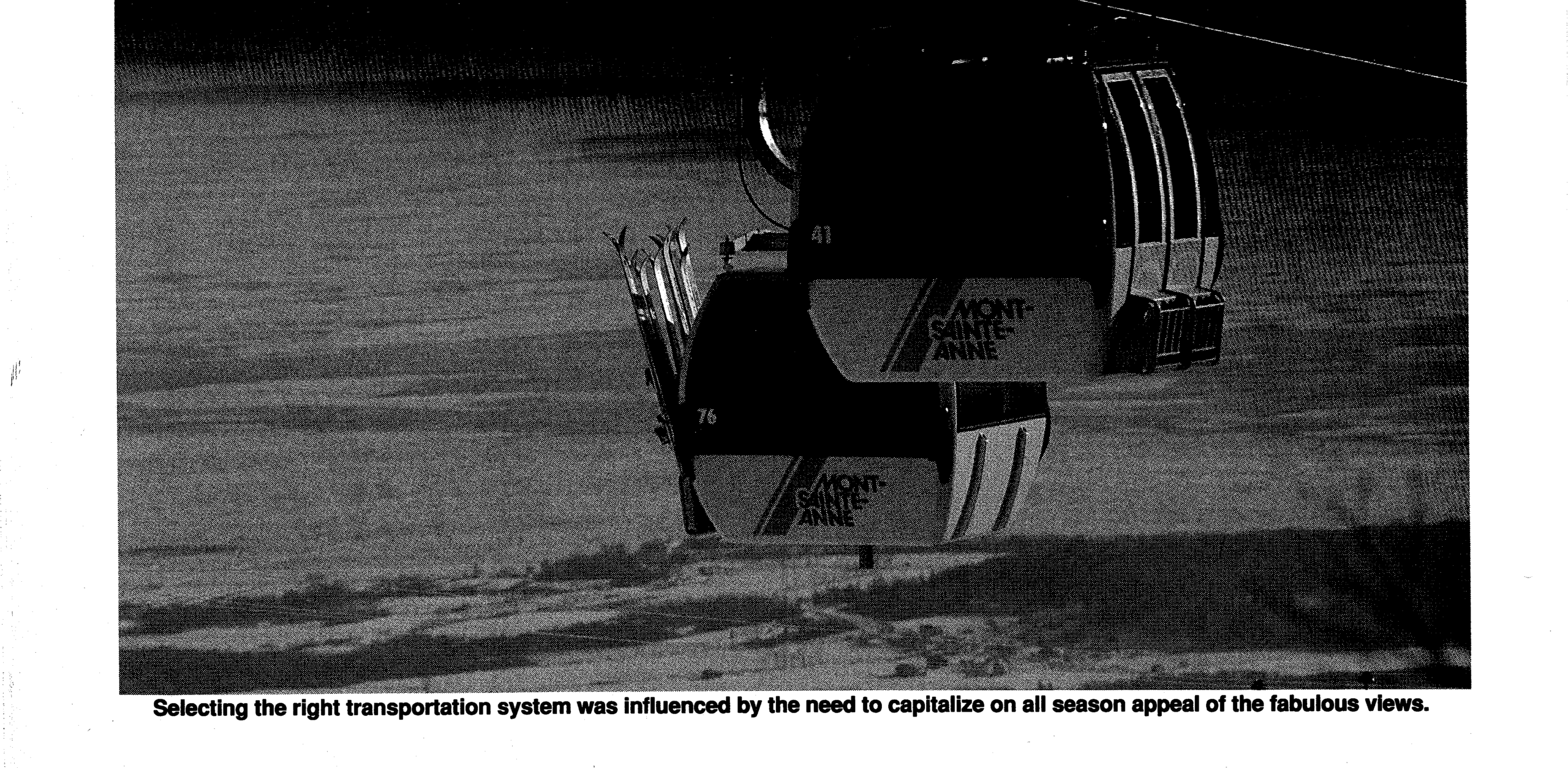
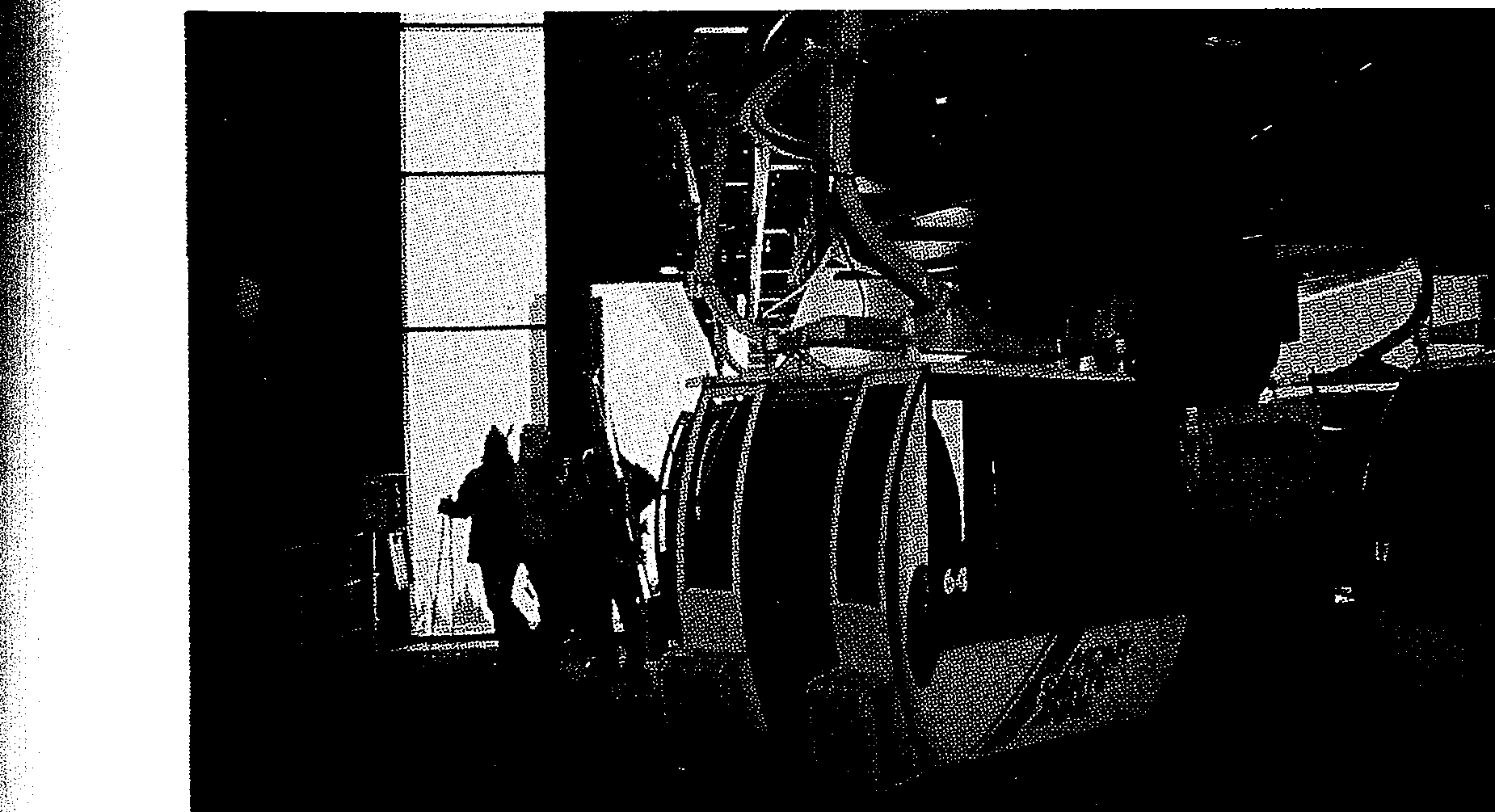
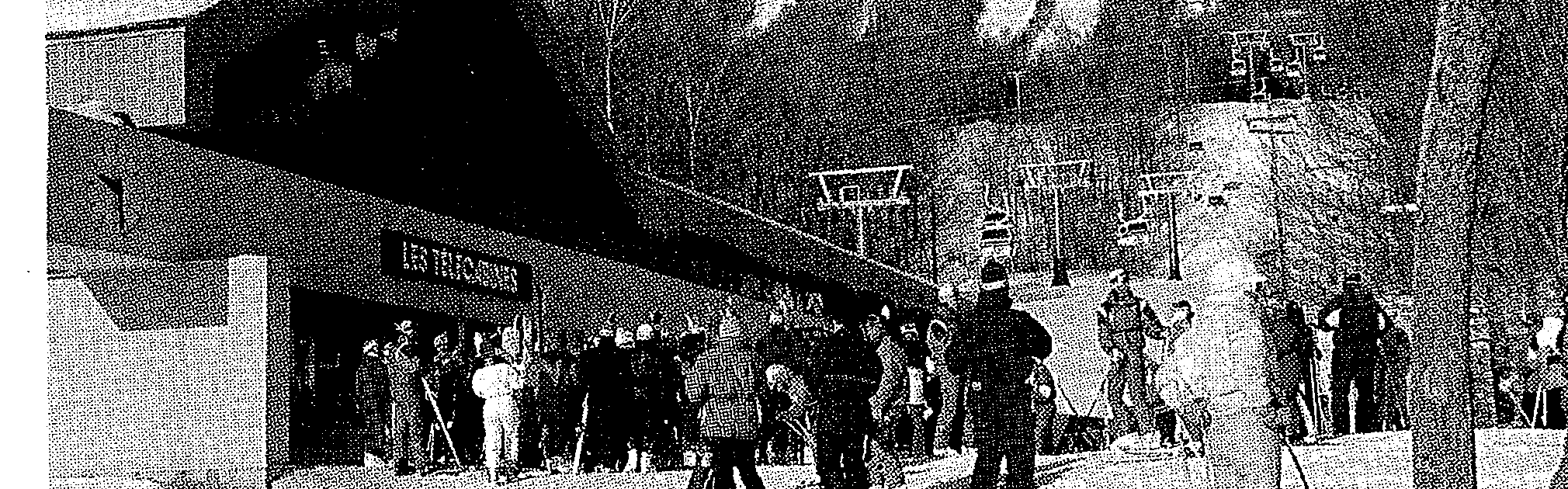
The lower terminal building is designed to match the architecture of the base village. There are no steps for the skier to climb since the loading area is at the same level as the ski slope. The enclosed space adjacent to the loading area serves two purposes: At night, all gondola cabins are stored both here and at the upper terminal; duing the day the space is used for the skier waiting lines. Even on busy weekends, the skiers wait inside. Doors similar to those found at airports open and close automatically for skiers entering the building to allow a comfortable enironment inside, no matter what the outside weather. A special gridded rubber carpet for the terminal floor, originally spotten in Europe, was imported from Austria, helping to provide a slip-free experience for skiers. The building also houses an employee lunch and locker room.
| Specification | Value |
|---|---|
| Type of lift | 8-passenger detachable gondola |
| Slope length | 7800 feet |
| Vertical Rise | 2050 feet |
| Capacity | 2800 pph |
| Travel time | 7.62 minutes |
| Spacing | 171 feet |
| Maximum line speed | 1000 ft/min |
| Maximum load/unload speed | 70 ft/min |
| Number of cabins | 99 |
| Number of towers | 25 |
| Line Gauge | 18 feet |
| Hauling Rope | 52 mm diameter 6×41 construction poly core, galvanized |
| Main Drive | (underfloor) 1000 hp Asea Brown Boveri DC SCR elec. drive |
| Stand by | Cummins VTA 28-P 700 turbocharged diesel onto hydraulic motor at auxiliary input unit of gearbox. |
| Gearbox | Lohmann GPW 290 split gear reducer |
| Emergency Drive | Ford 8 cylinder gas engine onto independent hydraulic motor with bolt coupling at auxiliary input unit of gearbox. |
| Drive location | Top |
| Tension location | bottom- single cylinder- 7 meter travel (23 feet) |
Skiers leaving the upper terminal also access the slopes through automatic doors. Integrated into the upper building is a large Ski Patrol room and information desk. Most of the drive machinery is located one level below the unloading area where 900 square feet is provided for easy access to the equipment for maintenance and servicing. An overhead hoist allows easy removal of the drive machinery.
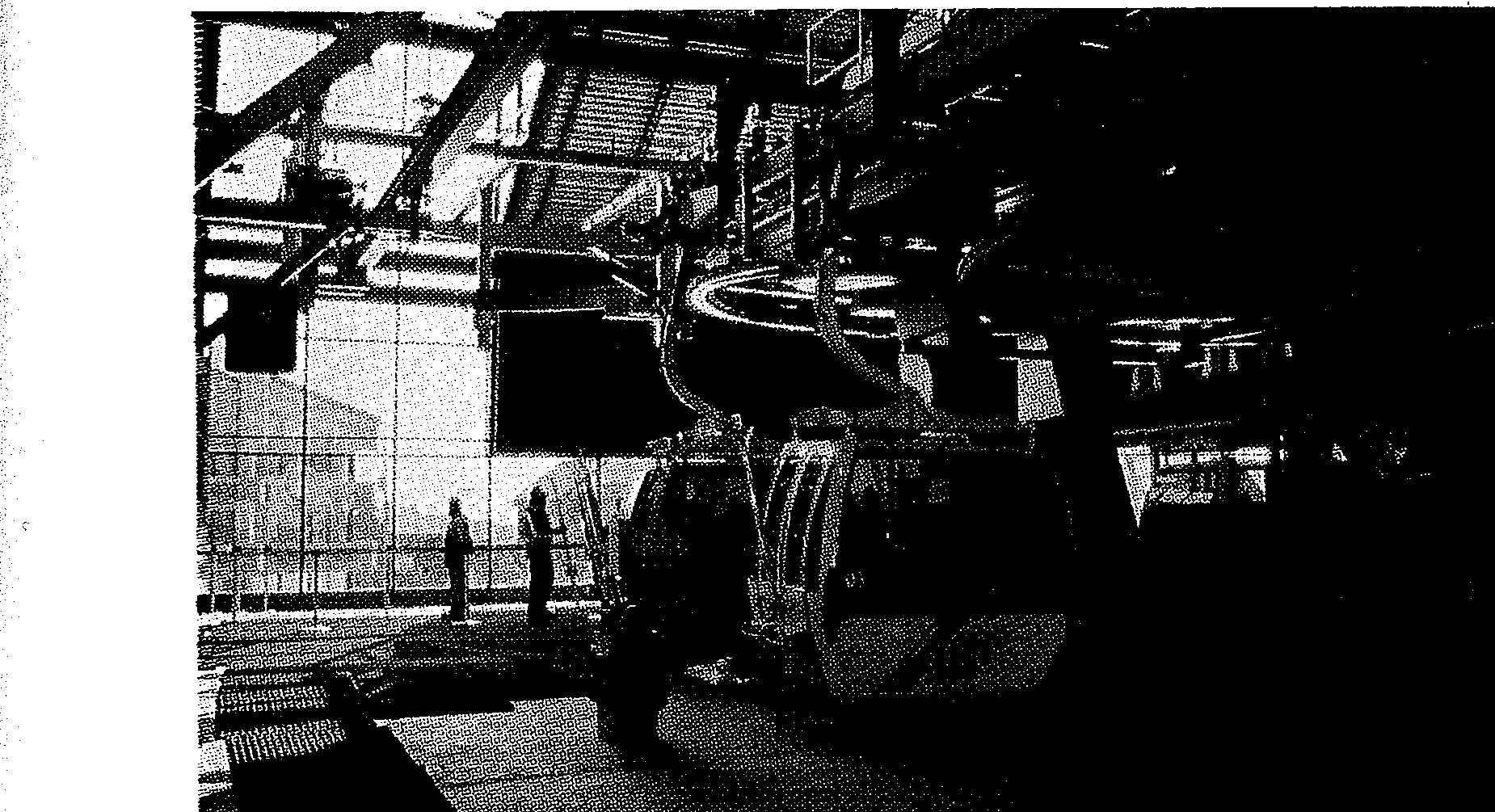
The supporting structure for the accelerator/decelerator/conveyor system is a large bridge truss which is simple in design yet very rigid. It provides excellent access to the conveying equipment for adjustment and maintenance. The gondola parking is also innovative. The rail on each row can be tilted up or down hydraulically to allow the cabins to slowly roll by gravity towards or away from the cabin loading area. Jean Bouchard, mountain engineer, says “With only two people at each terminal, the cabins can be placed online with the lift running at 80 percent speed. Within ten minutes, all the cabins are on.”
The 8-passenger “Omega” cabins feature automatic door operation, adjustable roof vent, and opening side windows. CWA also provided one “VIP Cabin” with deluxe cushioned seats, extra vents, and tinted windows. The “regulars” at Mt. Ste. Anne will often wait for this cabin. There is also an ambulance car that is kept at the top terminal.
With an eye on evacuation drills in Quebec’s cold winds, the lift profile was kept as close to the ground as possible. This was accomplished by using 25 line towers.
In addition to performance, the skier’s perception is an important factor in evaluating a new lift. Knowing that the old gondola was going to be replaced, some of Mont Ste. Anne’s customers felt a new quad bubble chair would be better than a gondola because they would not have to remove their skis. They also perceived gondolas as low capacity lifts, knowing only the existing gondola. “Those same customers, after experiencing the new technology and speed of Doppelmayr’s gondola, are now very happy with our choice,” Beaudoin stated. The average waiting line during weekends this year was 6 minutes and with the Christmas crowds the maximum wait was only 12 minutes.”
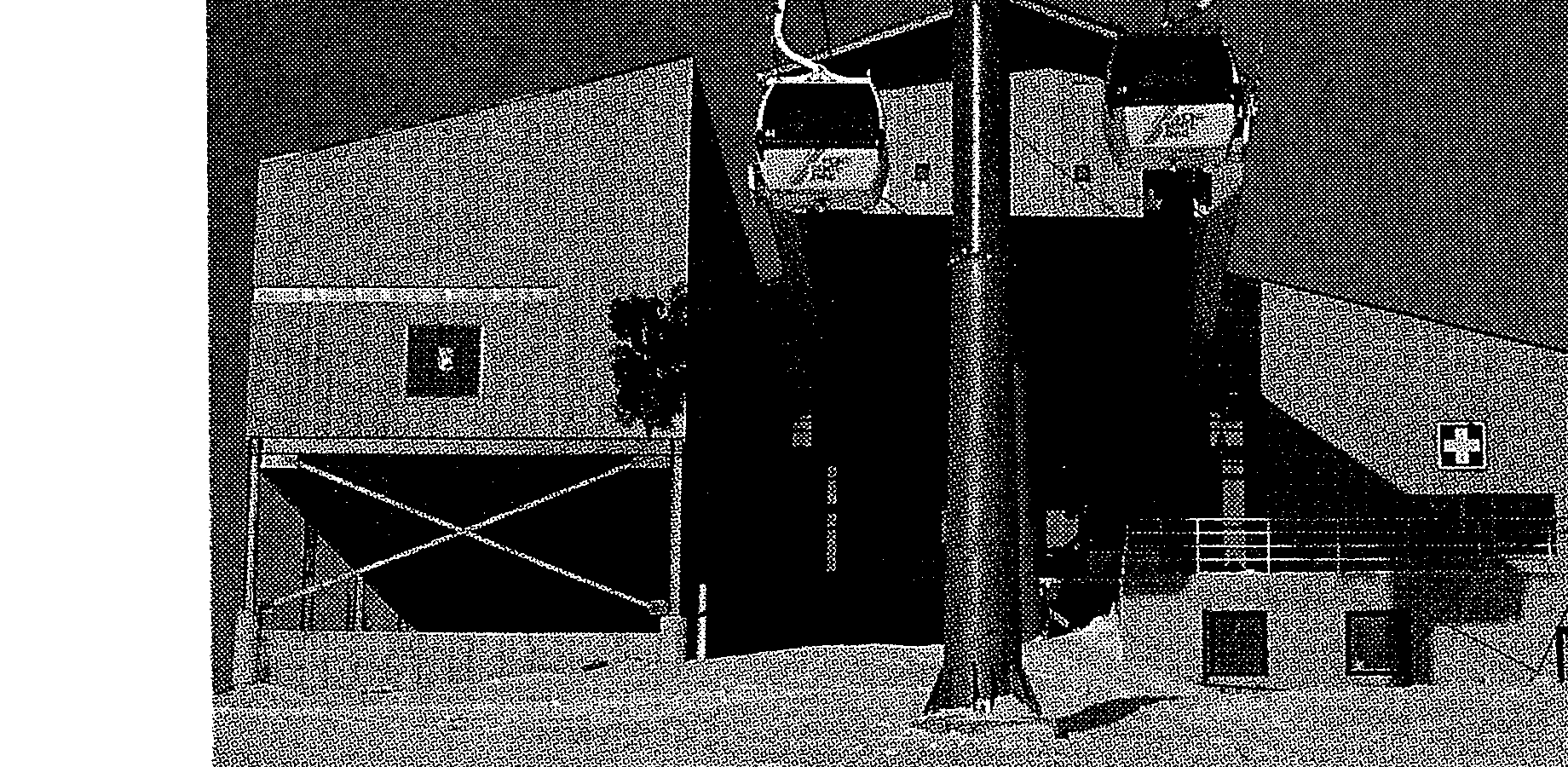
The total project cost, including the upper and lower terminal buildings, was CDN $7,300,000 (US $6,200,000). The gondola runs every day from 7 AM to 11 PM. By May 1 the gondola had operated over 3,500 hours. Total mechanical downtime has been less than five hours.